
Citroen C3: 12 V battery / Disconnecting the battery
In order to maintain an adequate state of charge for starting the engine, it is recommended that the battery be disconnected if the vehicle is taken out of service for a long period.
Before disconnecting the battery:
- close all openings (doors, boot, windows),
- switch off all electrical consumers (audio system, wipers, lighting, etc.),
- switch off the ignition and wait for four minutes.
At the battery, it is only necessary to disconnect the (+) terminal.
Quick-release terminal clamp
Disconnecting the (+) terminal
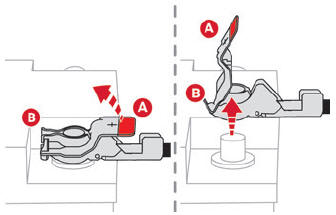
- Raise the lever A fully to release the clamp B.
- Remove the clamp B by lifting it off.
Reconnecting the (+) terminal
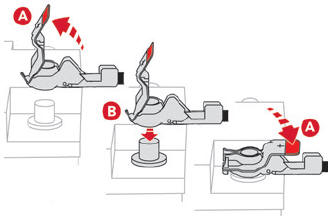
- Raise the lever A fully.
- Refit the open clamp B on the (+) terminal.
- Push the clamp B fully down.
- Lower the lever A to lock the clamp B.
Do not force the lever as locking will not be possible if the clamp is not positioned correctly; start the procedure again.
Following reconnection
After reconnecting the battery, turn on the ignition and wait 1 minute before starting the engine, to enable the electronic systems to initialise.
If minor problems nevertheless persist following this operation, contact a CITROËN dealer or a qualified workshop.
Referring to the relevant section, reinitialise certain equipment:
- Remote control key or electronic key (depending on version).
- Electric windows.
- Date and time.
- Preset radio stations.
 The
Stop & Start system may not be
operational during the trip following the
first engine start.
The
Stop & Start system may not be
operational during the trip following the
first engine start.
In this case, the system will only be available again after a continuous period of immobilisation of the vehicle, a period which depends on the exterior temperature and the state of charge of the battery (up to about 8 hours).
 Charging the battery using a battery charger
For optimum service life of the battery, it is
essential to maintain an adequate state of
charge.
In some circumstances, it may be necessary to
charge the battery:
using the vehicle mainly for short journeys;
if the vehicle is to be taken off the road for
several weeks...
 Towing
Procedure for having your vehicle towed or for towing another vehicle using
the towing eye.
General recommendations
Observe the legislation in force in the country where you are driving...
Other information:
Citroen C3 2016-2026 Owners Manual: Service indicator
The servicing information is expressed in terms of distance (kilometres or miles) and time (months or days). The alert is given at whichever of these two terms is reached first. The servicing information is displayed in the instrument panel. Depending on the version of the vehicle: The distance recorder display line indicates the distance remaining before the next service is due, or the..
Citroen C3 2016-2026 Owners Manual: AIRBUMP® protections
Located on the sides of your vehicle, they protect the bodywork by resisting everyday bumps and scrapes caused by parking posts, opening doors, scratches, etc. Maintenance of AIRBUMP® The AIRBUMP® do not require any specific maintenance. Clean them using water or one of the products available from a CITROËN dealer. To protect the AIRBUMP® against premature ageing, do not use polish...
Categories
- Manuals Home
- 3rd Generation C3 Owners Manual
- 3rd Generation C3 Service Manual
- Operation
- CITROËN ConnectedCAM®
- Energy economy mode
- New on site
- Most important about car
